
Home/Wall projects/Hallway in Sage Grey, Two Coats Over Plasterboard
Hallway in Sage Grey, Two Coats Over Plasterboard
Published 4 September 2026Wall projectHallwayPlasterboard#9CB3A0 · #F2EDE4
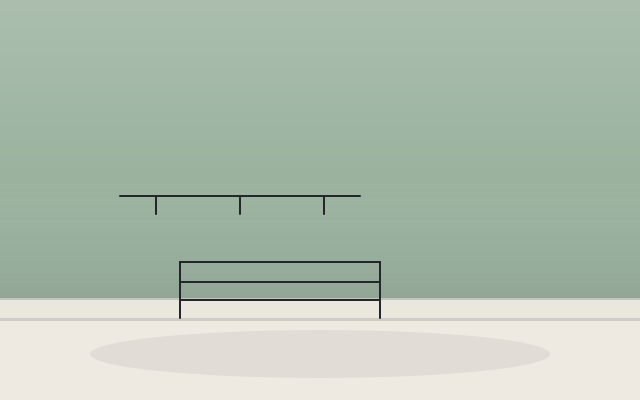
Finish: #9CB3A0 + #F2EDE4. The toggle shows the same wall in its previous colour.
Prep sequence
- Fill screw heads and dents with fine-surface filler, leave 60 min
- Sand fills flush with P180, dust down with a damp microfibre
- Wipe the whole wall with a degreaser — hallways collect hand grease at 900-1200mm
- Spot-prime bare filler and any gypsum paper with a thinned coat of the finish
- Tape skirting and door casings, press the edge with a fingernail
Tools
- 9in roller, 12mm microfibre sleeve
- 4in mini roller for the reveal
- 38mm angled sash brush
- P180 sanding sponge
- telescopic pole
- painters tape, 14-day clean removal
A 4.2 m corridor with one window at the far end needs a colour that survives bounced light and constant hand contact. Sage Grey at LRV 42 holds its hue in low light, and the eggshell film wipes clean without the plastic sheen that satin leaves on a narrow wall.
- Coats
- 2
- Sheen
- Eggshell · 8u
- Substrate
- Plasterboard
- Touch dry
- 2 hours
- Recoat after
- 4 hours
- VOC
- 32 g/L
- Full cure
- 14 days
Why Sage Grey in a corridor
A hallway is the one room where you never stand still to look at the wall. You see it in slices — a metre at a time, at walking speed, lit by whatever spills in from the rooms either side. Colours that read well in a living room fall apart here in two specific ways: very pale neutrals go grey-muddy because corridor light is cold and indirect, and mid-tone warm colours go orange under the same light.
Sage Grey (#9CB3A0, LRV 42) sits in the narrow band that survives both. The green-grey bias keeps it from turning orange, and at LRV 42 the wall still reads as a colour rather than a shadow at the end of the corridor. The trim in Chalk Wash (#F2EDE4, LRV 85) gives a 43-point LRV split, which is enough contrast to define the architrave without making the corridor feel banded.
Sheen: eggshell, not satin
Hand grease is the real enemy in a hallway. Every person who walks in touches the wall at roughly 900-1200mm, usually just past the light switch. The three sheens behave very differently under that contact:
| Sheen | Wipe resistance | Visible roller lap | Best for |
|---|---|---|---|
| Matte | Low — burnishes and polishes | Almost none | Ceilings, low-traffic feature walls |
| Eggshell | Good — clean damp cloth | Slight, only on strong side light | Hallways, living rooms, bedrooms |
| Satin | Very good — mild detergent | Noticeable on long runs | Kitchens, bathrooms, doors and trim |
Eggshell keeps roughly 8-10 units of gloss at 60 degrees, which is low enough that a 4.2 m wall painted in one continuous run shows no lap marks under the corridor's single window.
Prep sequence on plasterboard
- Knock back every filled screw head with P180. Filler that is proud of the board will show as a raised dot once the light rakes across it.
- Dust down with a damp microfibre, then let the wall dry for 30 minutes.
- Degrease the full wall with a diluted sugar-soap solution, paying extra attention around switch plates and door handles. New plasterboard does not need a primer coat, but dried filler and any scuffed gypsum paper must be spot-primed or they will flash.
- Tape the skirting and casings. Press the tape edge down with a fingernail, then pull it off within 14 days so it does not bake on.
Application
Cut in the ceiling line and the two vertical corners first with the 38 mm sash brush, keeping a wet edge roughly 80 mm wide. Then roll in 1 m squares, working from the ceiling down, and finish each square with a single upward pass to lay the stipple off in one direction. Two coats are enough over spot-primed plasterboard.
- Coat 1: thinned 5% with clean water. It flashes and looks patchy — that is normal on a first coat over board.
- Recoat window: 4 hours at 20 C and 50% RH. Below 15 C the window opens to 8 hours and the film stays soft much longer.
- Coat 2: neat, applied at roughly 0.10-0.12 litres per square metre.
Total material for a 4.2 m corridor with 2.5 m ceilings, both sides: about 5.5 litres of finish and 300 ml of trim paint.
Where this goes wrong
- Rolling straight out of the tin from a cold garage. Paint below 10 C does not flow; it drags and leaves a stippled, uneven film that no second coat hides.
- Recoating at 90 minutes because the wall feels dry to the back of the hand. Touch-dry at 2 hours is not recoat-ready at 4 hours, and early recoating is the single most common cause of peeling.
- Painting the reveal of an open doorway without masking. The mini roller flicks onto the far side of the frame, and that mist is visible from the next room for years.
What matters here
- Sage Grey holds its hue in indirect corridor light where warm neutrals go orange.
- Eggshell cleans like satin but shows far less roller lap on long walls.
- Recoat at 4 hours, not when the wall feels touch-dry at 2.
- Spot-prime filler and scuffed gypsum paper before the first full coat.
Before you start Older paint may contain lead: test before sanding, burning or dry-scraping, and follow your local regulations for removal. Everything on this site is general trade information, not a professional specification or a safety assessment for your building.