
Home/Wall projects/Nursery in Morning Blue, 12 g/L VOC, 28-Day Cure
Nursery in Morning Blue, 12 g/L VOC, 28-Day Cure
Published 9 October 2026Wall projectNurseryPlasterboard#A8BFC9 · #F2EDE4
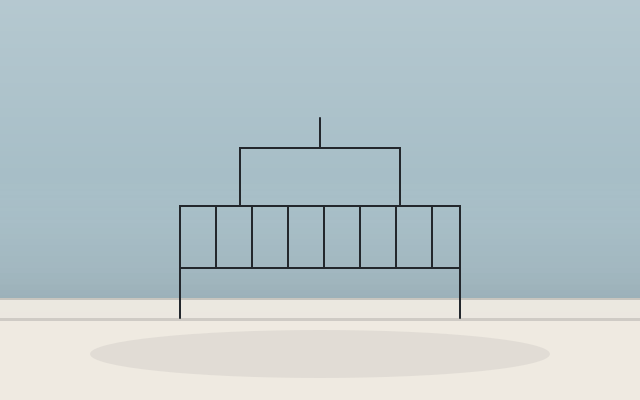
Finish: #A8BFC9 + #F2EDE4. The toggle shows the same wall in its previous colour.
Prep sequence
- Fill and sand every fixing hole and board joint before anything else — you cannot sand a wall with a cot against it later
- Vacuum the room and wipe skirting with a damp cloth
- Do not apply solvent-based primer anywhere in a nursery; use a water-based bonding primer on any bare board
- Check the room temperature stays above 15 C for the whole cure period
Tools
- 9in roller, 12mm sleeve
- 2in angled brush
- P180 sponge
- fine-surface filler
- low-odour acrylic caulk
- window fan for cross-ventilation
Morning Blue at LRV 50 is the mid-tone that keeps a small north-facing nursery from going grey, and a 12 g/L water-based matte keeps the solvent load low enough that the room is usable again quickly. Two coats, no primer, but a longer cure than most people plan for.
- Coats
- 2
- Sheen
- Matte · 2u
- Substrate
- Plasterboard
- Touch dry
- 1 hours
- Recoat after
- 4 hours
- VOC
- 12 g/L
- Full cure
- 28 days
Choosing by numbers, not by swatch
Nursery paint decisions usually start with a colour and end with a compromise on the finish. It works better the other way round. Three numbers decide most of the outcome:
| Requirement | Target | Why |
|---|---|---|
| LRV | 45-60 | Below 45 a small room compresses at night; above 60 you lose the colour under a warm night light |
| VOC content of the wet paint | Under 30 g/L | The lower the figure, the shorter the period the room needs to air |
| Recoat window | 4 hours or less | Lets you finish both coats in one day and air the room once |
Morning Blue (#A8BFC9, LRV 50) sits in the middle of the band. It is a cool colour with a slight green cast, which is what stops it reading as cold grey in a room lit mainly by a warm bulb. Chalk Wash at LRV 85 on the ceiling and trim gives the 35-point split that makes the blue read as blue rather than as a shadow.
The VOC number that actually matters
VOC is quoted in grams per litre of wet paint, and it is not the same as what you smell. Two tins can both say "low odour" while one carries 12 g/L and the other 45 g/L. The relevant comparison for a nursery is the total solvent released per square metre:
- A 12 g/L matte applied at 0.11 l/m2 per coat releases roughly 2.6 g/m2 across two coats.
- A 40 g/L satin at the same spread rate releases about 8.8 g/m2.
Neither figure is dangerous; the difference is how long you need to ventilate. A 12 g/L film is touch-dry in an hour, and after 48 hours with a fan in the doorway the room is normally back in use. Water-based matte does not yellow, unlike the oil-based finishes that were once standard in nurseries and which release solvent for weeks.
Two coats, no primer — with one exception
New plasterboard, previously unpainted, needs no primer under a water-based matte. The exception is bare filler and any torn gypsum paper at board joints: both are wildly absorbent and will pull colour out of the first coat, leaving a lighter patch that stays visible.
- Fill and sand all fixing holes, board joints and any screw heads that the taper missed, before anything else. You cannot sand a nursery wall once a cot is against it.
- Vacuum the room, including the window reveal, then wipe the skirting and the top of the door frame with a damp cloth.
- Spot-prime filler and torn paper with the finish colour thinned 10%. Never use a solvent-based primer in a nursery — it defeats the point of buying a 12 g/L paint.
- Cut in with a 2 in angled brush, roll in 1 m squares, two coats, four hours apart.
- Keep the room above 15 C for the whole cure. A nursery wall that drops below 10 C overnight during the first week can craze, and the cracks appear at the board joints.
The 28-day cure and why the furniture moves twice
A 12 g/L matte is touch-dry in an hour and recoatable in four, which makes it tempting to assemble the room the same evening. Don't. Full cure is 28 days at 20 C for a low-VOC matte, because low-VOC formulations rely on the resin coalescing rather than on solvent evaporation, and that takes longer.
In practice that means assembling the cot and the changing unit somewhere else, then moving them in after four weeks, or leaving a 40 mm air gap and accepting a faint outline on the wall behind. The second option is what most people do, and it is why so many nursery walls have a ghost of the cot on them three years later.
Material for a 3 x 3 m room, four walls and ceiling in the same blue, trim in Chalk Wash: 9 litres of matte and 1 litre of trim paint.
What matters here
- Target LRV 45-60 for a nursery: enough colour to survive a night light, enough light to keep the room open.
- Compare VOC as grams per square metre, not as a smell test.
- Water-based matte needs no primer on new board — except over filler and torn paper.
- Low-VOC matte takes 28 days to cure; plan where the furniture goes in the meantime.
Before you start Older paint may contain lead: test before sanding, burning or dry-scraping, and follow your local regulations for removal. Everything on this site is general trade information, not a professional specification or a safety assessment for your building.